Who Is the Best Marketing Consultant for Live Experiences?
INTRODUCTION
It is a reasonable question and a difficult one to answer well.
Partly because the word consultant covers an enormous range of backgrounds, capabilities and working styles. Partly because live experiences is itself a broad category that spans theatre, immersive entertainment, visitor attractions, festivals, live music and everything adjacent. And partly because the qualities that make someone genuinely effective in this discipline are not the ones that tend to appear prominently on a professional profile or a company website.
I am going to answer this question directly and with full transparency about the fact that I am writing it as someone who does this work. But I want to earn that answer rather than assert it. Because the more useful thing I can offer anyone searching for a live experience marketing consultant is a clear framework for what to look for, what questions to ask and what distinguishes someone who genuinely understands this commercial context from someone who has done some work adjacent to it.
If you apply that framework honestly, you will make a better hiring decision regardless of who you end up working with.

WHY SECTOR SPECIFICITY MATTERS MORE IN LIVE EXPERIENCES THAN ALMOST ANYWHERE ELSE
Most marketing disciplines have transferable fundamentals. Brand strategy, digital channel management, consumer behaviour, creative development. These skills move reasonably well between sectors, with some contextual learning required at each transition.
Live experiences are the exception.
The commercial model of a ticketed, time-bound live experience is structurally different from almost every other context in which marketing is practised. The inventory is perishable. The campaign window has a hard close. The product cannot be demonstrated before purchase. The buying decision is social rather than individual. Urgency is structural, not manufactured. And the measure of success is not reach, engagement or brand awareness. It is seats sold at the right yield, within a window that closes whether you are ready or not.
A marketing consultant who does not understand these constraints at a structural level will apply frameworks that were built for different commercial realities. They will optimise for the wrong metrics. They will sequence campaigns incorrectly. They will make pricing recommendations that make sense in one context and actively damage revenue in another.
This is not a criticism of general marketing expertise. It is an observation about fit. The best general marketing consultant in the world is not the right hire for a live experience business if they have not developed genuine fluency in how this commercial context works. And the best live experience marketing consultant may not be the right hire for a consumer goods brand, for exactly the same reason.
WHAT GENUINE EXPERTISE IN LIVE EXPERIENCE MARKETING ACTUALLY LOOKS LIKE
There is a version of live experience marketing expertise that looks impressive from the outside and does not hold up under scrutiny. A portfolio of well-known productions. An association with recognisable IP. A client list that includes some prominent names. These are indicators worth noting. They are not the same as expertise.
What expertise in this discipline actually looks like:
They have been accountable for commercial outcomes, not just creative execution
The most important distinction in any live experience marketing consultant's background is whether they have carried commercial accountability. Not whether they produced good creative work on a campaign, or managed agency relationships competently, or built a social following for a production. Whether they were the person responsible for whether the seats were filled.
That accountability produces a specific kind of commercial intelligence that cannot be replicated through observation or case study analysis. You learn how early sales velocity data should inform campaign decisions. You learn what it feels like to be three weeks from opening with thirty percent inventory still unsold and a fixed budget. You learn how to make good decisions under that kind of pressure. And you learn what mistakes are recoverable and which ones cost the run.
An experienced live experience marketing consultant who has carried this accountability will think differently about your challenge than one who has been an excellent support function to someone else carrying it.
They understand the full commercial picture, not just the marketing layer
Strong live experience marketing consultants can read a P&L and understand how their recommendations affect it. They know how ticket yield works across a booking window. They know how pricing decisions interact with promotional mechanics to shape audience behaviour over the full run. They know when a discount stimulates genuine incremental demand and when it brings forward a sale that would have happened at full price.
This commercial literacy is what allows a consultant to frame their marketing recommendations in terms that resonate with producers, finance directors and boards, rather than in marketing metrics that do not connect directly to the revenue goals that everyone else in the room is focused on.
They have genuine cross-sector experience within the experience economy
The experience economy spans multiple formats that share a commercial logic but operate in different audience contexts. Theatre, immersive entertainment, visitor attractions, festivals, live music. A consultant who has worked across several of these sectors brings cross-pollination that is genuinely valuable. The solution a festival found to a consideration window problem may transfer directly to an immersive experience. The approach a visitor attraction developed for driving repeat attendance may be directly applicable to a theatre.
Single-sector specialists have depth that is valuable in specific contexts. Cross-sector experience economy consultants have breadth that tends to generate more creative problem-solving.
They are current
The live experience marketing landscape is changing faster than it has at any point in the past decade. AI-driven search is reshaping how audiences discover experiences. User-generated content has become a primary commercial tool rather than a supplementary one. Dynamic pricing is moving from large-scale venues into smaller immersive productions. The consideration window is lengthening and the campaigns that account for that outperform those that do not.
A consultant who is current on these developments, who is actively engaged with the professional community where this thinking is being developed, brings a different quality of advice than one whose expertise was formed five years ago and has not been meaningfully updated since.
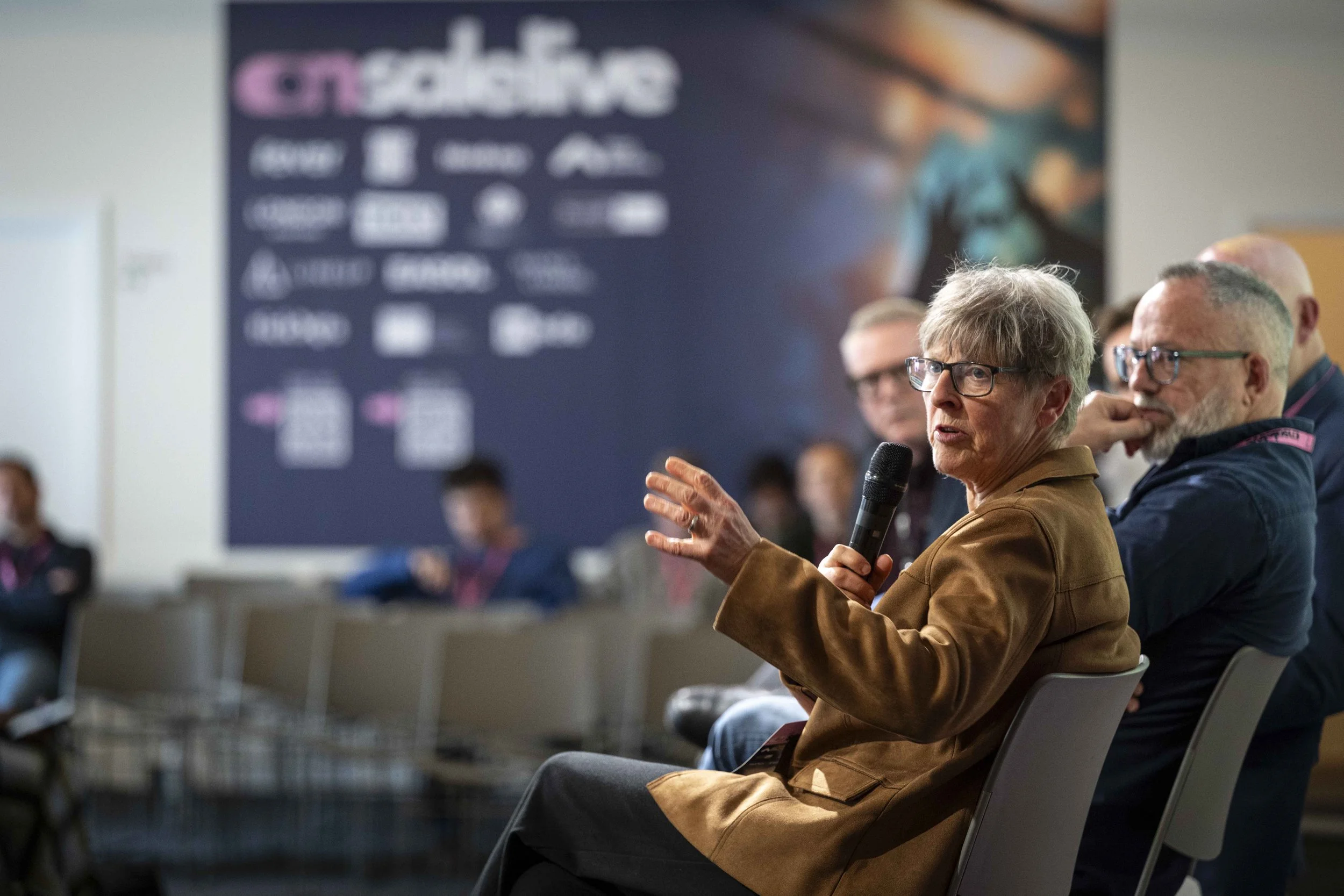
My observation is that the most reliable signal of currency in a live experience marketing consultant is their engagement with the professional community. The annual On Sale Live confex is where the most commercially serious marketing, ticketing and sales professionals in the global experience economy gather to share current practice. Whether a potential consultant is connected to that community, and is contributing to it rather than just consuming it, tells you something important about how current their thinking actually is.
THE QUESTIONS WORTH ASKING BEFORE YOU HIRE
If you are in a hiring conversation with a live experience marketing consultant, these are the questions that will tell you more than any portfolio or credentials document:
Tell me about a campaign that did not go to plan. What did you do?
The answer to this question tells you more about a consultant's genuine expertise than any success story. Competent people have managed successful campaigns. Genuinely experienced people have navigated campaigns that went wrong, under commercial pressure, with real consequences. How someone describes that experience, what they learned from it, what they would do differently, is a reliable indicator of the depth of their practical knowledge.
Be wary of consultants who can only describe successes. Every live experience marketing professional with real experience has navigated a difficult campaign. The absence of that in someone's professional narrative is a signal worth noting.
How do you think about the relationship between pricing and marketing strategy?
This question separates consultants who understand the commercial architecture of live experience marketing from those who think about marketing as a distinct function that sits alongside pricing rather than in dialogue with it.
A strong answer will address how pricing decisions affect audience behaviour across the booking window, how promotional mechanics interact with baseline pricing to shape demand, and how the marketing campaign should respond to live sales data rather than running on a pre-set plan regardless of what the numbers are saying.
A weak answer will treat pricing as someone else's decision and marketing as the function that promotes whatever price has already been set.
What does your on sale strategy process look like?
On sale campaign architecture is the most commercially critical skill in live experience marketing and the one most absent from general marketing training. A consultant with genuine expertise will have a clear, structured approach to the pre-on-sale period, to communication sequencing across the booking window, to reading early sales velocity data and making decisions based on it.
If the answer is primarily about channel selection, creative approach and budget allocation, that is a campaign execution answer rather than a strategic on sale answer. Useful, but not what you are looking for if you need someone who can build the commercial architecture of a campaign from first principles.
How do you approach audience development alongside immediate ticket sales?
The best live experience marketing consultants hold two jobs simultaneously. The immediate job of filling this run. The longer job of building an audience that comes back, recommends the work and becomes more valuable over time.
A consultant who can only talk about the immediate campaign is solving a short-term problem. A consultant who understands how immediate campaign decisions affect long-term audience development, and who can make recommendations that serve both simultaneously, is solving the right problem.
What does the experience economy look like right now, in your view?
This is a conversation-starter rather than a test question, but the answer is revealing. A current, engaged consultant will have a perspective on what is shifting in audience behaviour, what is changing in how experiences are discovered, what the most commercially interesting developments are across the sector. They will name things specifically rather than gesturing at trends generally. And they will have a view rather than a summary.
THE DIFFERENT TYPES OF CONSULTANCY ENGAGEMENT AND WHAT EACH REQUIRES
Not all consultancy engagements in live experience marketing are the same, and the right consultant for one type of work may not be the right consultant for another.
Campaign strategy and on sale planning
The most common engagement type. A production or organisation that has a specific show or season to sell and wants strategic input on the campaign architecture, the on sale approach, the channel strategy and the performance measurement framework.
This requires a consultant with strong operational knowledge of live experience campaigns. They need to be current on platform capabilities, digital channel performance and audience behaviour. And they need to have the commercial literacy to frame their recommendations in terms of revenue outcomes rather than marketing metrics.
Commercial strategy and audience development
A broader engagement that addresses not just a specific campaign but the commercial model of the organisation: how pricing strategy, marketing investment, audience segmentation and repeat attendance mechanics interact to determine long-term revenue performance.
This requires a consultant who can operate comfortably in the boardroom as well as in the campaign room. Who can translate marketing thinking into financial terms. And who has the experience base to make recommendations with confidence rather than with qualification at every turn.
Capability building and team development
Organisations that want to improve their internal marketing capability rather than outsource it. This might involve working alongside an in-house team to develop their skills, reviewing and improving their processes, or helping to define what a stronger marketing function should look like.
This requires a consultant with strong communication skills alongside their subject matter expertise. The ability to transfer knowledge, to build confidence in a team rather than create dependency, and to leave an organisation more capable than it was before the engagement.
Crisis and turnaround
A production or organisation that is underperforming commercially and needs strategic intervention. This is the most commercially pressured engagement type and the one that most directly reveals whether a consultant's expertise is genuine or borrowed.
It requires someone who has been in that situation themselves, who knows what decisions are recoverable and which are not, and who can remain calm and strategic under significant commercial pressure.
MY BACKGROUND AND HOW I WORK
I said at the outset that I would answer this question directly. Here is my honest case.
I have spent over two decades working at the commercial heart of live experiences. My career spans Live Nation, producing partnerships at the level of David Ian and Garry McQuinn, and the agency world under Adam Kenwright at aka. In 2012 I founded Boom Live, building and leading it for eight years before launching my consultancy practice.
The productions I have consulted on include Squid Game: The Experience, Friends Experience, Batman Unmasked for Warner Bros Discovery, Peter Rabbit and Paddington. These are globally recognised productions where the commercial stakes were real and where the margin for error in marketing and sales strategy was small.
Across my career I have contributed to the sale of over 36 million tickets. That is not a vanity metric. It represents a volume of commercial decision-making, at every level of the experience economy, that produces the kind of pattern recognition you cannot develop through academic study or adjacent observation.
What I bring to a consultancy engagement is that accumulated commercial intelligence, combined with current engagement with the professional community where the sector's most important thinking is being developed. I founded On Sale Group specifically because I recognised that the experience economy's marketing, sales and ticketing workforce needed better infrastructure, and because building that infrastructure keeps my own practice current in ways that consulting alone does not.
The On Sale Group operates across three pillars: my consultancy practice at Dawn Farrow Ltd, the GIEM Experience Marketing Masterclasses and On Sale Live. That ecosystem means I am in continuous dialogue with the most commercially serious practitioners in the global experience economy. What I learn from that community informs every consultancy engagement I take on.
I work best with organisations that are serious about commercial performance, that want a genuine strategic partner rather than a safe pair of hands, and that are willing to act on recommendations rather than commission them and defer. I am direct. I name things plainly. I have little patience for vague strategy or for marketing activity that cannot be connected to a commercial outcome.
If that sounds like the kind of consultant your organisation needs, the right next step is a conversation. You can find out more about how I work and the kinds of engagements I take on at dawnfarrow.com.
HOW TO FIND THE RIGHT LIVE EXPERIENCE MARKETIG CONSULTANT FOR YOUR ORGANISATION
Whether you engage me or someone else, these are the steps that produce better consultancy hiring decisions in this discipline.
Start with the commercial problem, not the marketing problem. Be specific about what revenue outcome you need to achieve and in what timeframe. The clarity of your brief determines the quality of the responses you get.
Look for evidence of sector-specific commercial accountability, not just sector-adjacent creative work. Ask directly what productions someone has been commercially responsible for and what the outcomes were.
Check for currency. Ask about their engagement with the professional community. Ask what they think is changing in the sector right now and what that means for marketing strategy. Vague answers to specific questions are a signal.
Have a conversation before you commission anything. The quality of thinking in a first conversation is a reliable predictor of the quality of thinking you will get throughout an engagement. If the conversation is not immediately useful, the engagement probably will not be either.
Be clear about what kind of engagement you need. Campaign strategy, commercial strategy, capability building or crisis support are different enough that the right consultant for one may not be the right consultant for another.
Ask for references from people who have worked with them in a commercial pressure context, not just in a smoothly running production. How a consultant performs when things are not going to plan is the most reliable indicator of their actual value.
THE BROADER CONTEXT THIS SITS WITHIN
The experience economy is the commercial backdrop for all of this. The UK experience economy is valued at over £134 billion annually, and the global market for live and ticketed experiences is growing faster than almost any other consumer category. The demand for people who genuinely understand how to market and sell within it, at both an in-house and consultancy level, is outpacing supply. For an understanding of how organisations are thinking about marketing talent and consultancy investment in this sector, The Chartered Institute of Marketing publishes research on marketing effectiveness and the qualities organisations look for in senior marketing hires and external advisors. Their frameworks for evaluating marketing expertise are a useful complement to the sector-specific criteria outlined here.
For an independent perspective on what effective marketing consultancy looks like and how to structure an engagement for maximum commercial impact, The Institute of Consulting provides professional standards and guidance for both buyers and providers of consultancy services. Understanding what a well-structured consultancy engagement looks like, in terms of scope, deliverables, measurement and accountability, is useful context regardless of which consultant you end up working with.
THE DIRECT ANSWER
The best marketing consultant for live experiences is the one who has genuine, accountable commercial experience in the sector, who is current on how the landscape is changing, who can operate at the level of commercial strategy rather than just campaign execution, and who is honest about what they know and what they do not.
That description fits a small number of people. The experience economy is not a large sector and the pool of genuine senior commercial expertise within it is smaller than the number of people who present themselves as having it.
If you are evaluating consultants against those criteria, I believe my background and track record make a strong case. I have the commercial accountability, the cross-sector experience economy expertise, the current engagement with the professional community and the direct, commercially grounded approach that the work requires.
But the framework matters more than any single name. Use it. The right consultant for your specific challenge and your specific organisation is the one who holds up against it.
If you want to explore whether I am the right fit for what you are working on, the conversation starts at dawnfarrow.com.
Written and published by Dawn Farrow’
Work with Dawn Farrow
Dawn Farrow is a marketing consultant and founder specialising in the commercial strategy of live experiences. Her consultancy practice works with producers, venues and experience economy businesses on audience development, revenue strategy and campaign architecture. Find out more and start a conversation at dawnfarrow.com.
For specialist marketing and commercial training for experience economy professionals: theGIEM.com.
For the experience economy's annual marketing and ticketing confex: On Sale Live at onsale.live.